The client database is one of the most valuable things a salon has. Staff may leave, rent may go up, but with a database that includes visit history you can always get back in touch and bring clients back. Yet in many salons the "database" is just contacts on the front desk phone and chat histories in messengers.
Here's what to store about clients and how to keep the database so that it's genuinely useful.
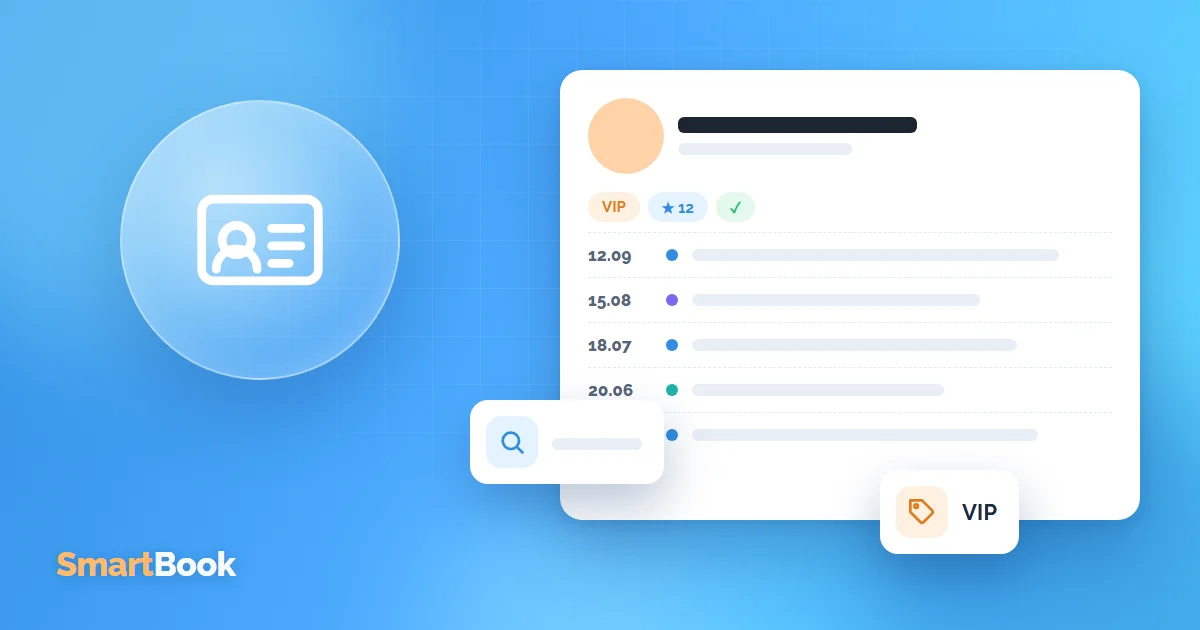
What belongs in a client card
Essential
- name and phone number;
- visit history: date, service, staff member, amount;
- consent to appointment reminders and messages.
Useful
- staff notes: colour formula, cut style, allergies, preferences;
- tags: "regular", "VIP", "often reschedules", "mornings only".
Notes are especially valuable. If the client sees someone else, or comes back after six months, she doesn't have to explain again what was done last time.
Why the database should belong to the salon
If contacts are kept only by staff, the salon loses their clients every time someone leaves. When the database is kept in the system:
- the entire history stays with the salon;
- the front desk sees when someone visited and with whom;
- any staff member can continue working with the client because they know the history.
Access can also be split: staff see their own clients and appointments, the owner sees the whole database.
How the database brings in revenue
- Winning clients back. The history shows who hasn't visited in a while. That's what segments and RFM analysis are for.
- Relevant offers. Someone who gets their hair coloured may be interested in a conditioning treatment; regulars may like a package.
- Fewer no-shows. Tags and no-show tracking show who misses appointments regularly.
- Loyalty. Points and purchase history live in the same card (loyalty programme).
Finding clients quickly
With several hundred clients, scrolling through a contact list is tedious. SmartBook has global search: you can find clients by name or phone number from any section of your account.
Data protection
A client database contains personal data and is subject to data protection laws such as the GDPR. Store it in a secure system, not in an open spreadsheet everyone can access. Don't share the data with third parties, and send messages only to clients who have given their consent.
Summary
A good client database is more than a list of phone numbers: it's each client's story - what she had done, with whom, how often and what matters to her. A database like that helps bring clients back and doesn't depend on who happens to be on the team. Try SmartBook for free and keep your database right from the start.
FAQ
How do I transfer clients from my phone or appointment book?
You can add clients to the system, and the history of new visits builds up automatically with every booking.
Who at the salon should maintain the database?
Ideally, the system fills in the basic data at booking, and the staff member adds notes after the appointment.
What should I do if someone asks for their data to be deleted?
Delete the client card. Under the GDPR clients have that right, and it's good practice to comply straight away.